Little Rivers Health Care Earns Three National Quality Awards from HRSA
Three national badges reflect the daily work of our clinical, IT, and front desk teams in eastern Orange County
Little Rivers Health Care has been recognized by the Health Resources and Services Administration (HRSA) with three 2026 Community Health Quality Recognition (CHQR) badges, a distinction awarded to only a fraction of the nation's federally qualified health centers each year.
This year, LRHC earned:
- National Quality Leader: Cancer Screening, placing our health center among the top performing sites in the country for cancer screening rates
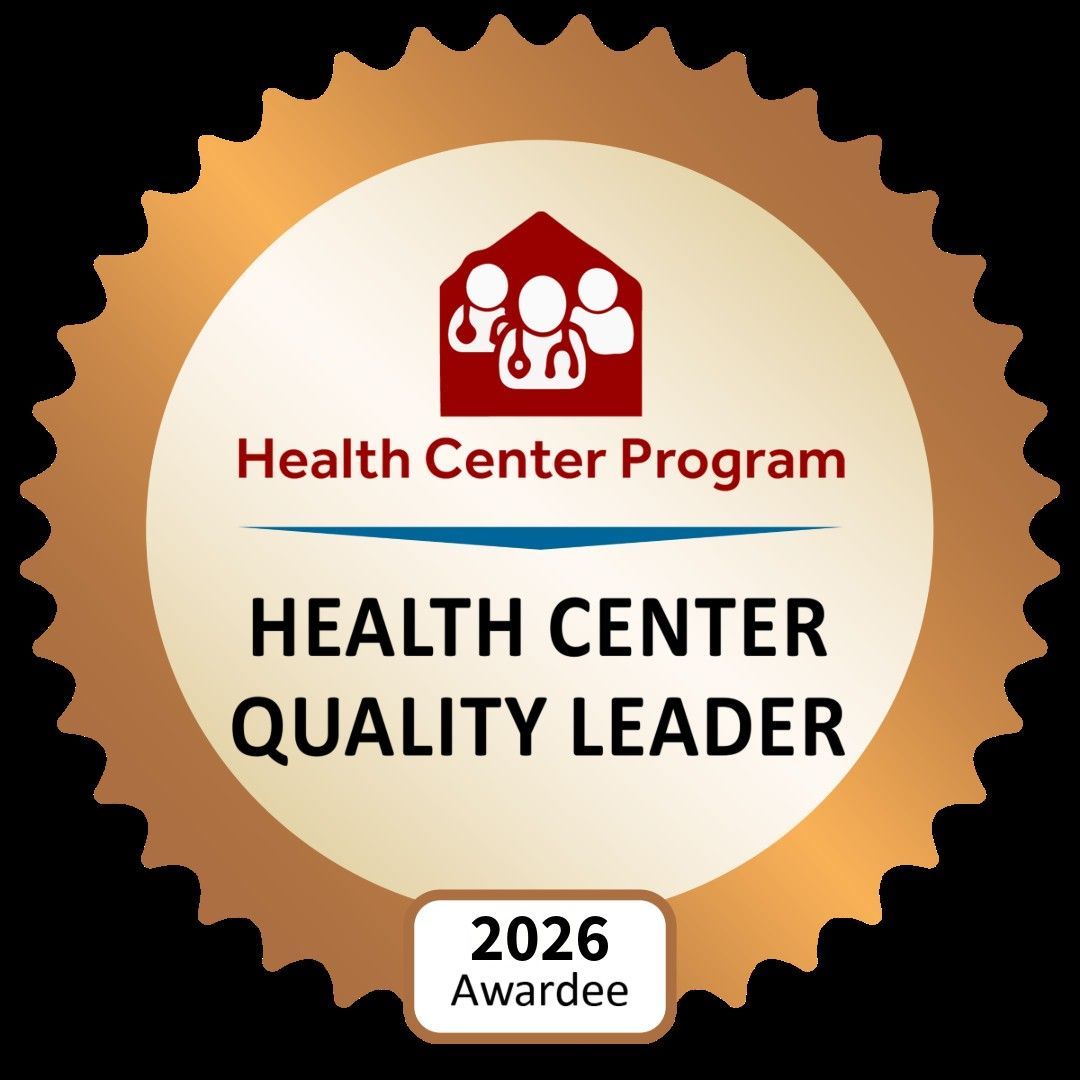
- Health Center Quality Leader: Bronze, recognizing overall clinical quality performance in the top 30% of health centers nationally
- Advancing HIT for Quality, honoring our effective use of health information technology to improve patient care
For a small, rural health center serving Orange and Caledonia Counties from four locations, Bradford, East Corinth, Newbury, and the Whitney Rowe Clinic in Wells River, earning three national badges in the same year is a significant achievement, and one worth explaining, since the standards behind it are demanding.
What It Takes to Earn a CHQR Badge
HRSA's CHQR program isn't a self-nomination. It's calculated directly from a health center's annual Uniform Data System (UDS) report, the same clinical, operational, and financial data every federally qualified health center must submit each year. HRSA compares that data across every health center in the country and awards badges to those that rise to the top in specific categories:
- Health Center Quality Leader badges are split into Gold (top 10%), Silver (top 11 to 20%), and Bronze (top 21 to 30%) tiers, based on clinical quality measures such as chronic disease management, preventive screenings, and other evidence-based benchmarks tracked across an entire patient population, not just a sample.
- Access and Equity badges recognize health centers that grow patient volume, close health disparities among underserved populations, or address social risk factors like food insecurity and housing instability.
- Advancing HIT for Quality recognizes health centers that use electronic health records, telehealth, and patient engagement tools as real tools that improve care, not just as compliance requirements.
Because these badges are drawn from a full year of population-level data, there is no shortcut to earning one. A health center cannot perform well for a quarter and coast. The numbers reflect what happened, consistently, for every patient, all year long.
The Work Behind the Data
A badge like this can look like a single accomplishment, but it is really a reflection of dozens of people doing their jobs well, every day, in a system that runs smoothly enough to produce results like these.
Hitting national top-tier cancer screening rates means providers are reliably having those conversations at every visit, care teams are tracking who is due for a mammogram or colonoscopy, front desk staff are helping patients navigate scheduling barriers, and referral coordination is closing the loop when a patient needs a specialist. Advancing HIT for Quality does not happen because a health center bought good software. It happens because clinical staff use that software consistently and well, and because the people managing those systems keep them running in a way that supports care instead of getting in its way.
None of this is the work of one department. It reflects the day-to-day discipline of clinical teams, care coordinators, medical records and IT staff, front desk teams, and leadership all pulling in the same direction, a credit to the culture Andrew Barter and our clinical leadership have built here, where quality is not a special initiative. It is simply how LRHC operates.
Why This Matters for Our Communities
For the patients we serve across rural Orange and Caledonia Counties, these badges are not abstract. They signal that the care available close to home, in Bradford, East Corinth, Newbury, and Wells River, meets the same bar as health centers anywhere in the country. In a rural service area where transportation and distance can already be barriers to care, that matters.
We are proud of what this recognition says about our team, and grateful to every staff member whose consistent, careful work, visit after visit, chart after chart, is what these badges actually measure.